▍Patient Condition
A 62-year-old male presented with left-sided chronic sinusitis and had previously undergone Functional Endoscopic Sinus Surgery. He has no systemic diseases and has quit smoking.
Chief complaints: tooth mobility and missing posterior teeth.
▍Treatment Course
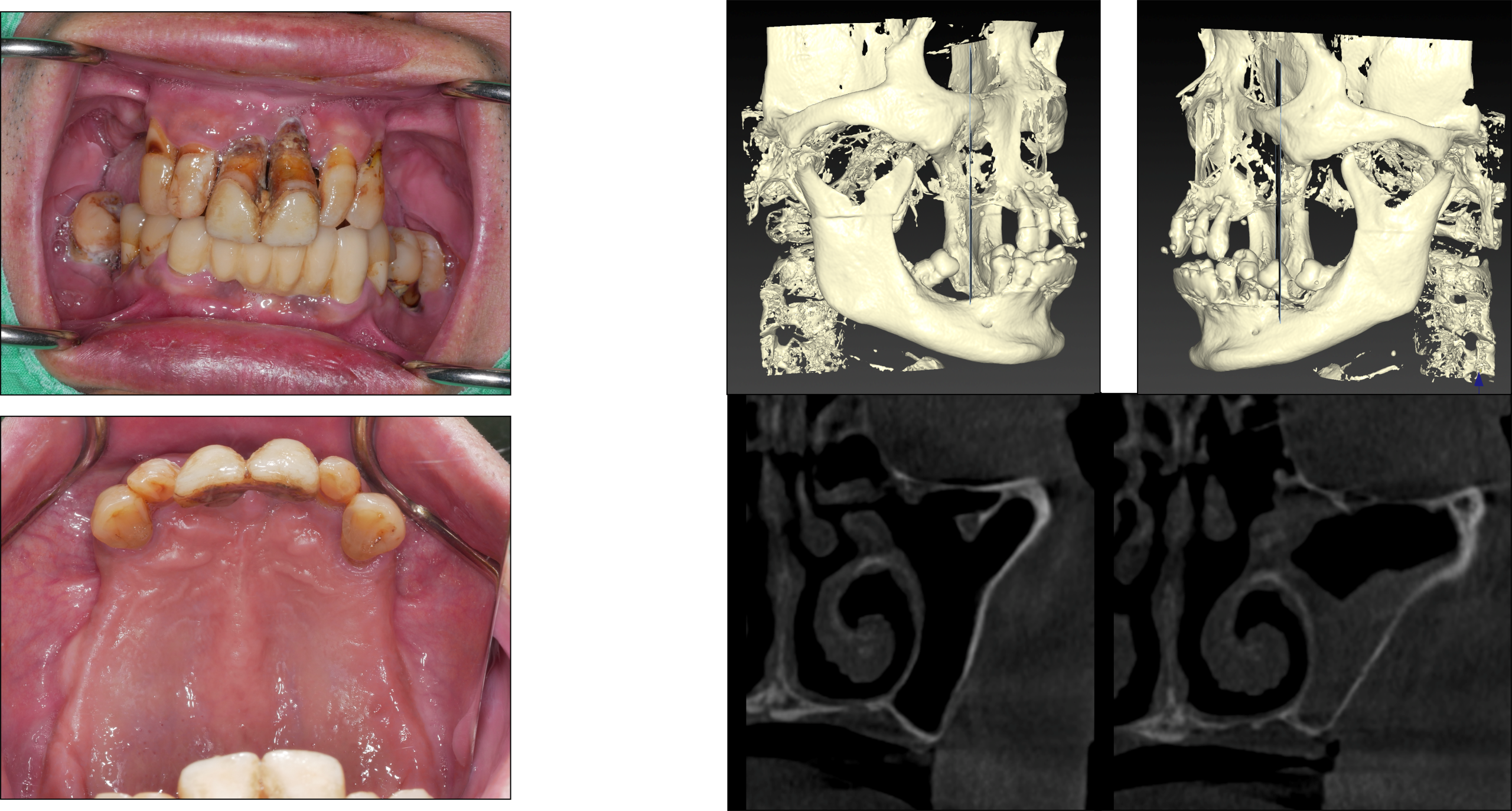
Clinical considerations: Due to poor oral hygiene, the crestal bone height at the posterior maxillary sinus floor was very thin, and the basal bone in the anterior region was also narrow. Therefore, a staged zygomatic implant approach was adopted.
Rationale for modification: Since the anterior teeth were still capable of providing support, a provisional prosthesis was first fabricated to maintain esthetics. For the posterior region, a two-stage zygomatic implant reconstruction was performed, combined with sinus augmentation to reduce the risk of oroantral communication.
Risk management: The patient is male, with strong natural dentition and an unbalanced occlusion. A staged approach helps avoid the risk of compromised osseointegration associated with immediate loading, and also reduces the likelihood of oroantral communication following loading of zygomatic implants. Additionally, the staged protocol allows time for implant osseointegration and separation of the sinus membrane from the oral cavity. During this period, oral hygiene education can also be reinforced.
▍Preoperative Considerations (Special Case)
Poor oral hygiene and very thin residual crestal bone height
1.Oral hygiene and disease control
2.11,21 ext. + 12-22 temp bridge
3.15,25 staged zygoma implant
4.UA contour GBR
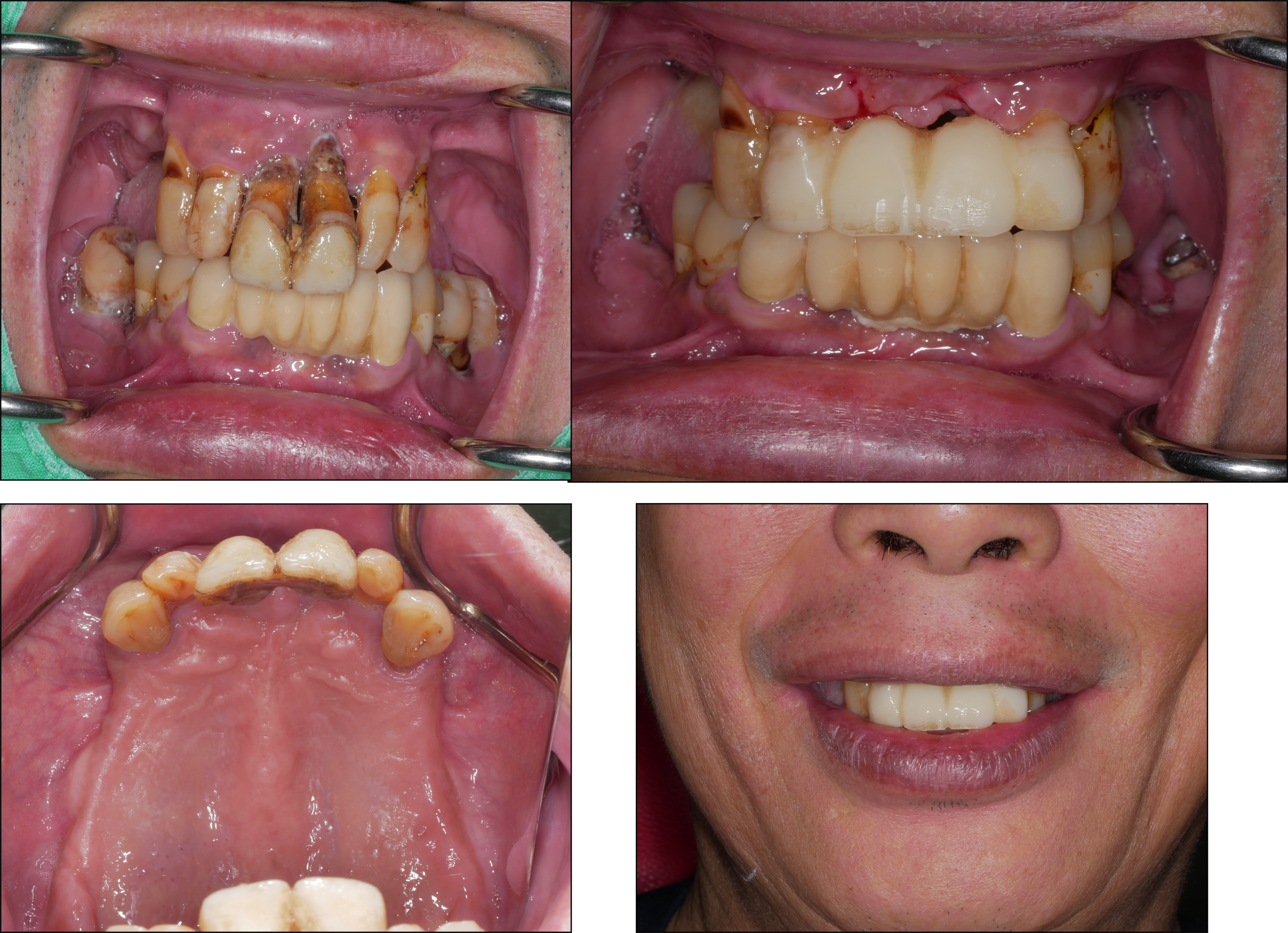
15,25 staged zygoma implant surgery + sinus augmentation & UA contour GBR
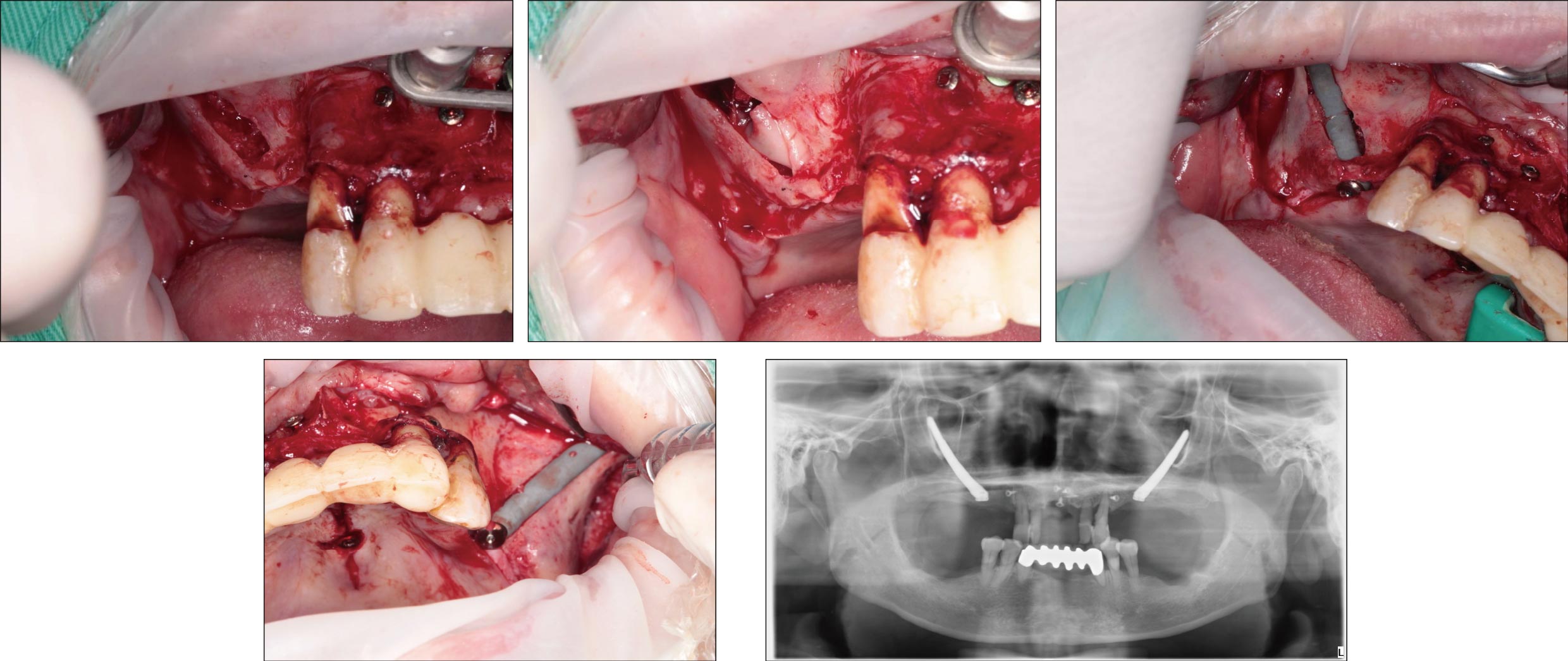
▍Second-stage surgery (thin sinus wall).
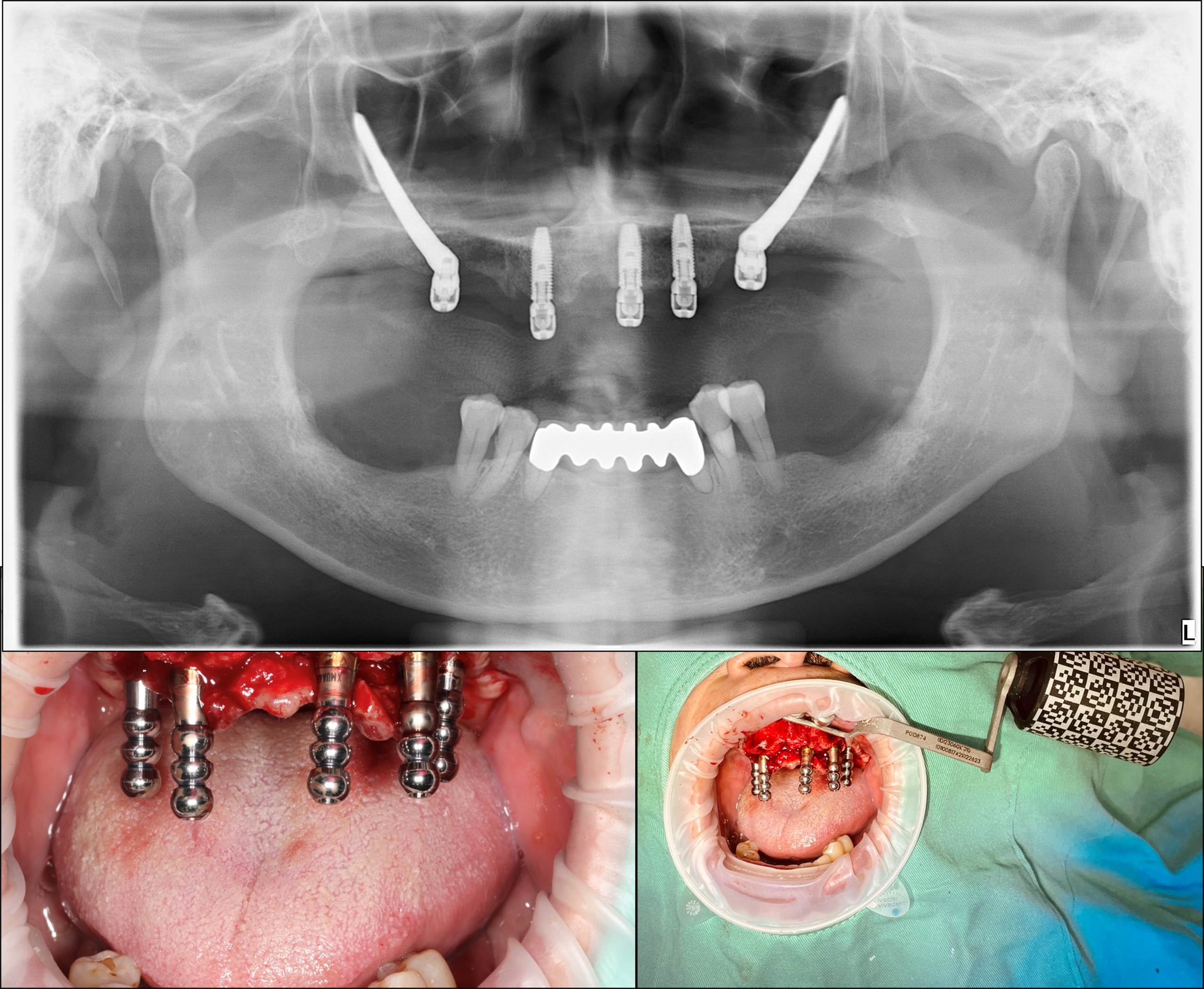
After 4 months, the basal bone GBR in the anterior region had healed, and implants were placed at #12 and #22, completing the maxillary All-on-5 procedure.
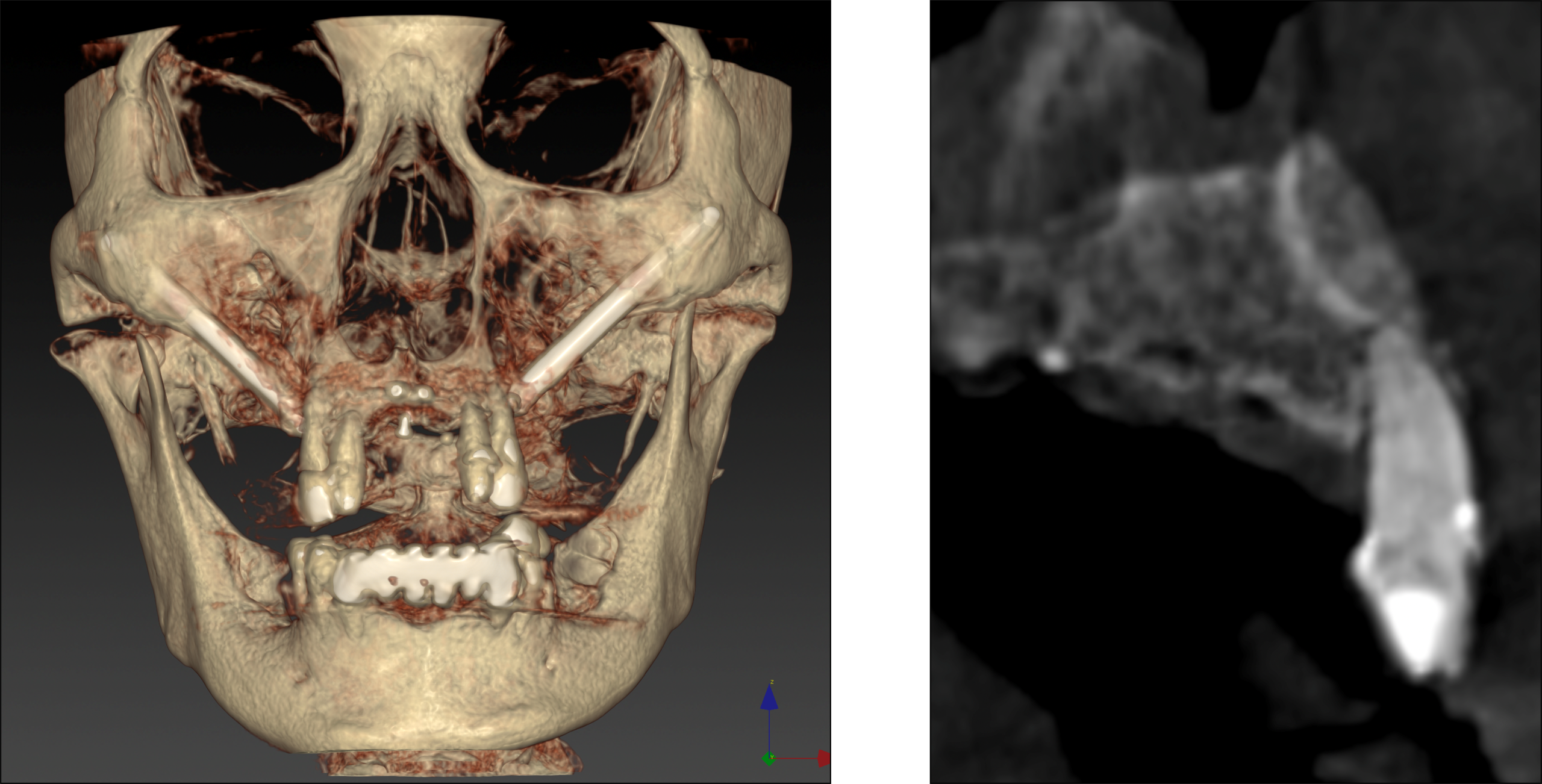
Navigated photogrammetry was performed on the same day following the second-stage surgery.
▍Definitive prosthesis was delivered for the maxilla.
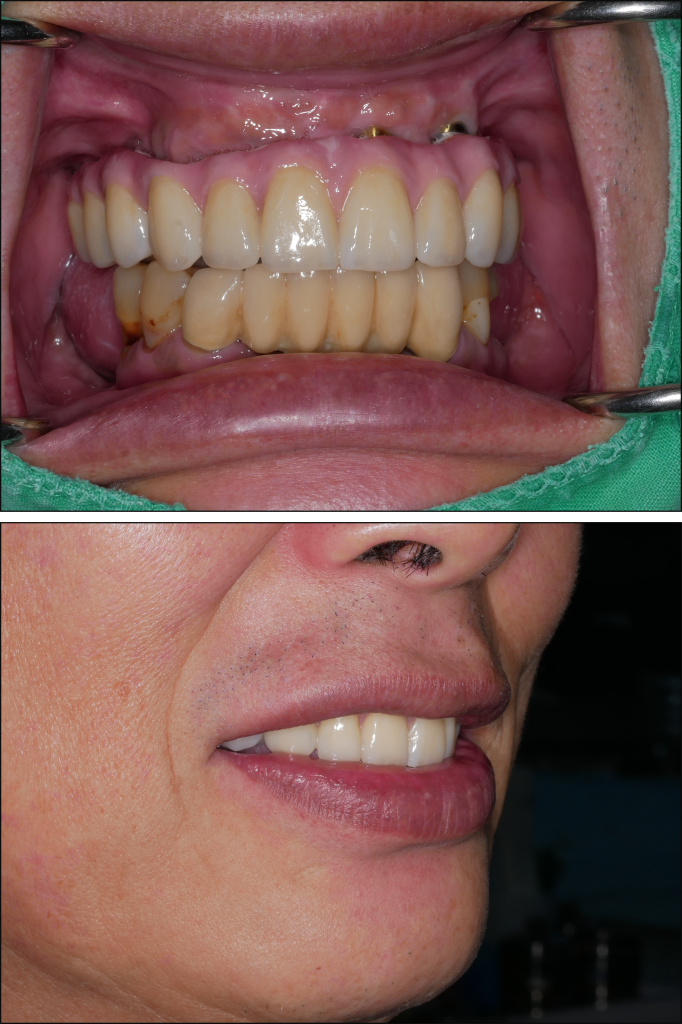
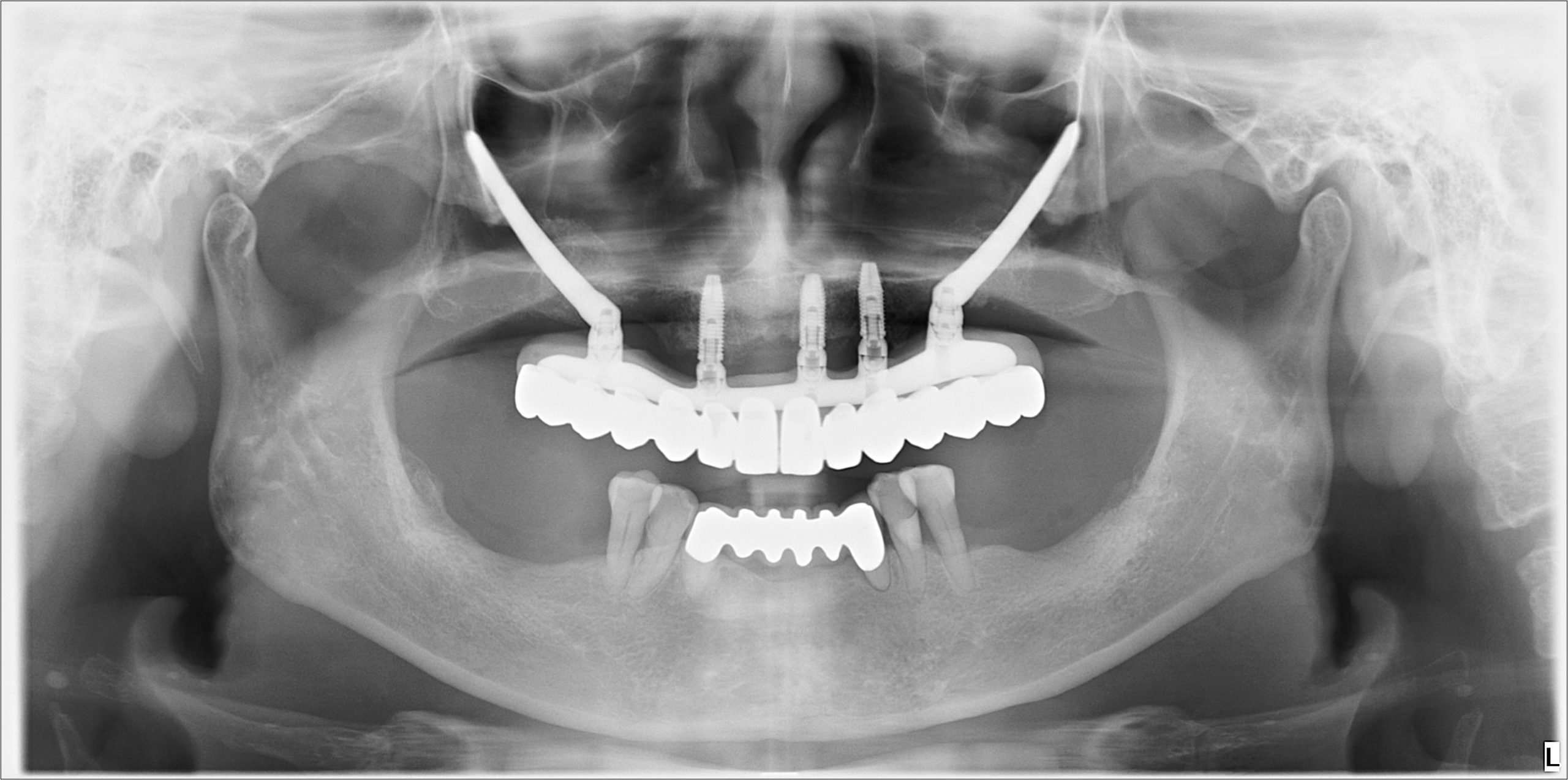
▍Postoperative panoramic radiograph after delivery of the definitive prosthesis.